
I helped launch over 2,000 entrepreneurs online with great websites, positioning, clever branding, and certainly enough passion to fuel sustainable growth.
But I realized a flaw in the process early on, and began to adjust how I encouraged entrepreneurs to launch. Too many of them were investing too much time, energy, and money in the theoretical concepts, risky marketing strategies, and banking on year one returns that simply were unrealistic.
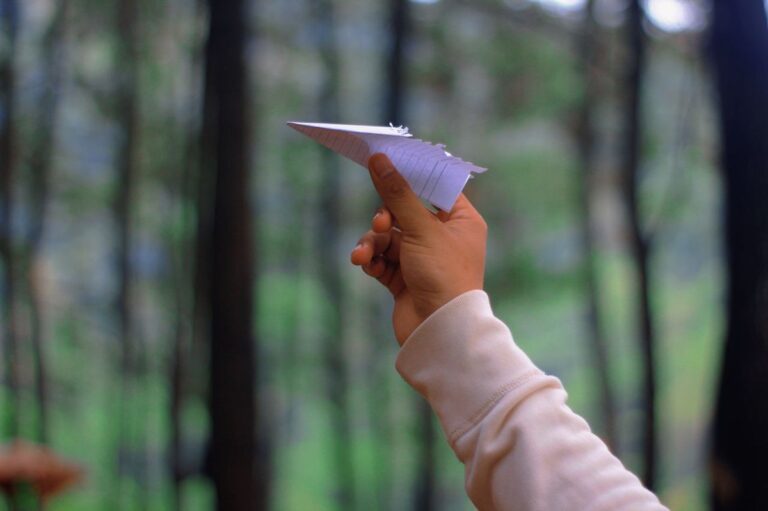
A better approach? The paper airplane approach.
What is the Paper Airplane Approach to launching a business?
If you ask anyone to make a paper airplane and give them a piece of paper, they get right to work! Put them on a time-crunch and they’ll be even more excited to toss their creation in the air and see what happens.
Usually, there is chatter about how the plane will fly, where they learned this method, and their expected outcomes… all until they launch!
That final thrust into the air is an exciting moment of completion, testing, anticipation and hope that the plane performs.
Inevitably one of two things happens; either the plane triumphantly soars on some flight path that mirrors what they had in mind (across the room, somewhat straight… or twirling forward with perfect loops), or it does the opposite of what they expected and quickly descends or flips aimlessly around in a tailspin.
I have never met someone who then cried or got angry or gave up.
Immediately, they retrieve their plan and try again or quickly grab another piece of paper and start refolding the next “best flyer ever”. They have excuses for the failure or explanations for the success. Crosswind, interference, too hard a throw, not enough room etc The list grows.
But they get right back to work and don’t sweat it.
They adjust and learn from the first flight.
And the next flight.
And they enjoy the design, launch, relaunch process.
The flight doesn’t define the pilot.
Justin Rule
This is how we should approach entrepreneurship – especially when we are young.
The key to launching a successful business is not expecting your first one to go perfectly. Rather, if you expect your first flights to be learning curves and you don’t take failure or success to your head, you’ll be ready to learn and launch the next one.
Overthinking about how you’ll perform in the perfect conditions is not preparing for the real world of entrepreneurism.
Taking your best guesses based on what you have learned in the past or seen from others will give you the courage to try.
If at first you don’t succeed, try, try again.
Thomas H Palmer
So many of those wishing to be successful entrepreneurs spend too much time planning and not enough time learning, listening, testing, and re-testing.
It may mean, like me, you have 26 job experiences before you find the perfect fit of your skills, passions, opportunities, place, and maturity to actually enjoy a profitable and sustainable, wholesome, and healthy business for yourself.
There’s a lot to learn with each flight – and plenty of business language and best practices for running a small business – so be prepared to enjoy the learning curve.
It might just be your ‘next try’ that leads to the flight you anticipated.
The paper plane approach is a call back to childlike simplicity and curiosity that does not take yourself too seriously, and enjoys the learning, the highs and lows, and realizes that your flight doesn’t define the pilot.
Rather, the pilot gets to decide how much he will enjoy each flight.
So go get a piece of paper and make a plane.